
Last updated November 25, 2026
 Sweep & inspection
 Caps & crowns
 Flue relining
 Masonry repair
 Gas fireplace service
Level 1 sweep and inspection to the NFPA 211 annual standard - flue, crown, cap, and flashing checked and photographed
Chimney sweep logs do not sweep chimneys. They loosen some creosote - which then falls where a brush and vacuum still have to collect it.
Chimney Cleaning Warning Signs: A Boulder Homeowner’s Reference Guide
Most homeowners think a chimney problem announces itself with smoke rolling into the living room. In our experience, the loud failures are rare. The quiet ones matter more. A chalky white stain on the brick outside, a fire that’s slow to catch, a faint musty smell on a warm day in Boulder – these are the signals that show up long before anything cracks or collapses. The trouble is that most people don’t know what they’re looking at, so they wait until a small moisture problem turns into masonry work measured in thousands of dollars.
This guide teaches you to read your own chimney. We’ll cover the stains, smells, sounds, and smoke behaviors that tell you what’s happening inside the flue, and we’ll draw a hard line between “watch this and schedule an inspection” and “stop burning fires right now.” You don’t need a ladder or a tool kit. You need to know what to look for and where.
Quick Answer
The warning signs that matter most are: a chalky white residue (efflorescence) on the exterior brick, glazed or tar-like creosote visible at the firebox opening, smoke that’s slow to draw or back-puffs into the room, a powdery or flaky crown, and any musty or animal smell coming from the flue. Any of these warrants a professional inspection before your next fire. A few signs – glazed creosote, a cracked flue tile, or smoke entering the room – mean stop burning until a sweep clears it.
Styles & brands we work with
- Sweep & inspection
- Caps & crowns
- Flue relining
- Masonry repair
- Gas fireplace service
Table of Contents
- Why Boulder Chimneys Show Warning Signs Early
- Normal Soot vs. Third-Degree Creosote: What You Can See at the Firebox
- What Your Smoke Is Telling You About the Flue
- Reading Your Chimney From the Ground: Efflorescence, Spalling, and Crown Cracking
- Sounds and Smells That Signal Animals, Nesting, or Moisture
- Stop Burning vs. Schedule an Inspection: The Difference That Matters
- How Boulder’s Climate and Housing Stock Shape Chimney Wear
- A Seasonal Walkaround Checklist for Boulder Homeowners
Why Boulder Chimneys Show Warning Signs Early
Boulder sits in a climate that punishes masonry in slow motion. Freeze-thaw cycles are the main reason. Water soaks into brick and mortar during a wet spring snow or a summer storm, then drops below freezing overnight and expands. That expansion is small each time, but it repeats. Over a few seasons, the face of a brick flakes off, mortar joints open up, and the whole assembly starts to take on water faster than it can dry.
That’s why we tell homeowners here to look at their chimney differently than they would in a milder climate. A hairline crack in the crown or a small gap in a mortar joint isn’t cosmetic in Boulder. It’s the entry point for the freeze-thaw cycle that drives most of the structural damage we see.
Add wood smoke to the picture. A chimney that drafts poorly, or one that’s been run hard all winter without a sweep, builds up creosote – the tar-like residue from incomplete combustion. Some of it is harmless soot. Some of it is the glazed, flammable kind that causes chimney fires. The difference is visible if you know where to look.
The signals you can catch without a professional
We’ve found that an attentive homeowner can spot most developing problems weeks or months before they become expensive. That’s not a knock on professional sweeps – it’s the point of this guide. The earlier a warning sign gets reported, the more of the chimney you can save.
- Stains and discoloration on the exterior brick, at ground level
- Creosote texture at the firebox opening, visible with a flashlight
- How the fire catches, draws, and puffs on a normal burn
- The smell that greets you when you open the damper in the fall
- Sounds inside the flue, especially on a cold morning
- The condition of the crown and cap, from where you stand on the ground
If you only do one thing, learn to chimney sweep on a schedule and learn the annual walkaround. The two together catch most of what goes wrong here in Boulder.
Normal Soot vs. Third-Degree Creosote: What You Can See at the Firebox
Creosote forms in three stages, and only the third one is a fire hazard that demands attention right now. First-degree creosote is a thin, flaky, soot-like coating you can brush off with a chimney brush. Second-degree is a crusty, flaky layer with a harder bond to the flue. Third-degree is glazed – shiny, tar-like, and often described as looking like black glass or varnish. That’s the one that fuels chimney fires, and it’s the one a homeowner can often spot by looking up into the firebox opening from inside the house.
Here’s how to distinguish what you’re seeing. Grab a flashlight and look up past the damper. Note the color and texture of what’s on the flue walls.
What each stage looks like
- First-degree: Soft, powdery gray or black soot. Wipes off easily. Normal after a season of burning.
- Second-degree: Flaky, crusty, and harder to the touch. Sooty chips may drop down onto the firebox floor.
- Third-degree: Shiny, black, tar-like glaze. Looks almost wet or reflective. Doesn’t crumble when you poke it with a flashlight end.
If you see third-degree creosote, stop burning fires and get the flue cleaned before the next burn. The heat from a single normal fire can ignite a glazed layer. That’s a chimney fire, and it can crack the flue tile without your hearing a thing from inside the house.
If you see first- or second-degree creosote, you’re due for a cleaning on your normal schedule – typically once a year for a wood-burning fireplace under regular use. The deeper question is why the creosote is building up in the first place. Slow fires, wet wood, and an undersized flue all contribute. That’s where an inspection earns its keep – it tells you whether the creosote is a symptom of a problem you can fix in the firebox or a flue that needs lining work.
What Your Smoke Is Telling You About the Flue
Smoke is your chimney’s behavior report. It’s telling you about draft, moisture, and blockage – if you pay attention to how it moves. A healthy fire pulls smoke up cleanly and steadily. A chimney with a problem shows it in one of three ways: slow to draw at startup, back-puffing at any point in the burn, or excessive odor even when the fire is burning well.
Slow to draw at startup
A fire that needs ten minutes and a lot of coaxing to establish draft is a chimney telling you something. The most common cause in Boulder is a cold flue – the air inside the chimney is denser than the air it’s trying to pull in from the room. A pre-warmed flue usually solves that. But if a chimney that used to draw well now consistently labors at startup, the flue could be partially blocked: a bird’s nest, a sagging liner, or a heavy creosote load near the top.
Back-puffing into the room
Back-puffing is a stronger signal. Smoke that puffs out of the firebox into the room mid-burn means the chimney isn’t pulling at the rate the fire needs. Causes range from a damper that’s not fully open to a flue that’s too small for the firebox, to negative pressure from a kitchen fan or furnace. It can also mean a blockage. Back-puffing is not a normal chimney behavior and shouldn’t be ignored. In our experience, it’s the single most common reason people call us before they’d otherwise have booked a sweep.
Excessive odor
A wood-burning fireplace has a mild smoky smell, especially on a cold, damp day. A stronger, mustier, or more persistent smell is worth investigating. It can mean creosote buildup, moisture in the flue, or a cap that’s letting water in. You’ll know it’s off because it annoys you on a warm day – a chimney in good shape shouldn’t smell at all when it’s not being used.
If smoke behavior changes in any of these ways, a professional chimney repair visit to inspect the flue, cap, damper, and liner will find the cause. We come out with a camera for that reason – you should be able to see what we see.
Reading Your Chimney From the Ground: Efflorescence, Spalling, and Crown Cracking
You don’t have to get on the roof to spot the most important exterior warning signs. Standing on the ground, you can read three things: efflorescence, spalling, and crown cracks. Each tells a different story about how much moisture your chimney is holding.
Efflorescence: the white ghost
Efflorescence is a white, powdery, or chalky staining pattern that appears on brick and mortar. It’s salt from the brick drawn to the surface by water moving through the masonry. It looks cosmetic. It is not. Efflorescence is direct evidence that water is moving through the chimney’s exterior. Left alone, that same water cycle leads to spalling.
What it looks like: a patchy, milky white or grayish haze, typically in a band, in a corner, or along the mortar joints. It often disappears after a dry spell and reappears after rain or snowmelt – that’s the tell.
Spalling: the brick face falling off
Spalling is what happens when the freeze-thaw cycle wins. Brick faces flake off in sheets or chunks, mortar joints widen and start to erode, and the outer layer of the chimney looks like it’s peeling. Once spalling starts, the chimney is losing structural mass, not just cosmetic surface. This is the point where small repairs become large ones.
In our experience on Boulder homes, spalling shows up first on the south- and west-facing sides of the chimney – the sides hit by the most sun and the most rapid temperature swings. Look for the face of the brick to be “soft” or hollowed at the edges, with aggregate visible where the surface used to be.
Crown cracking
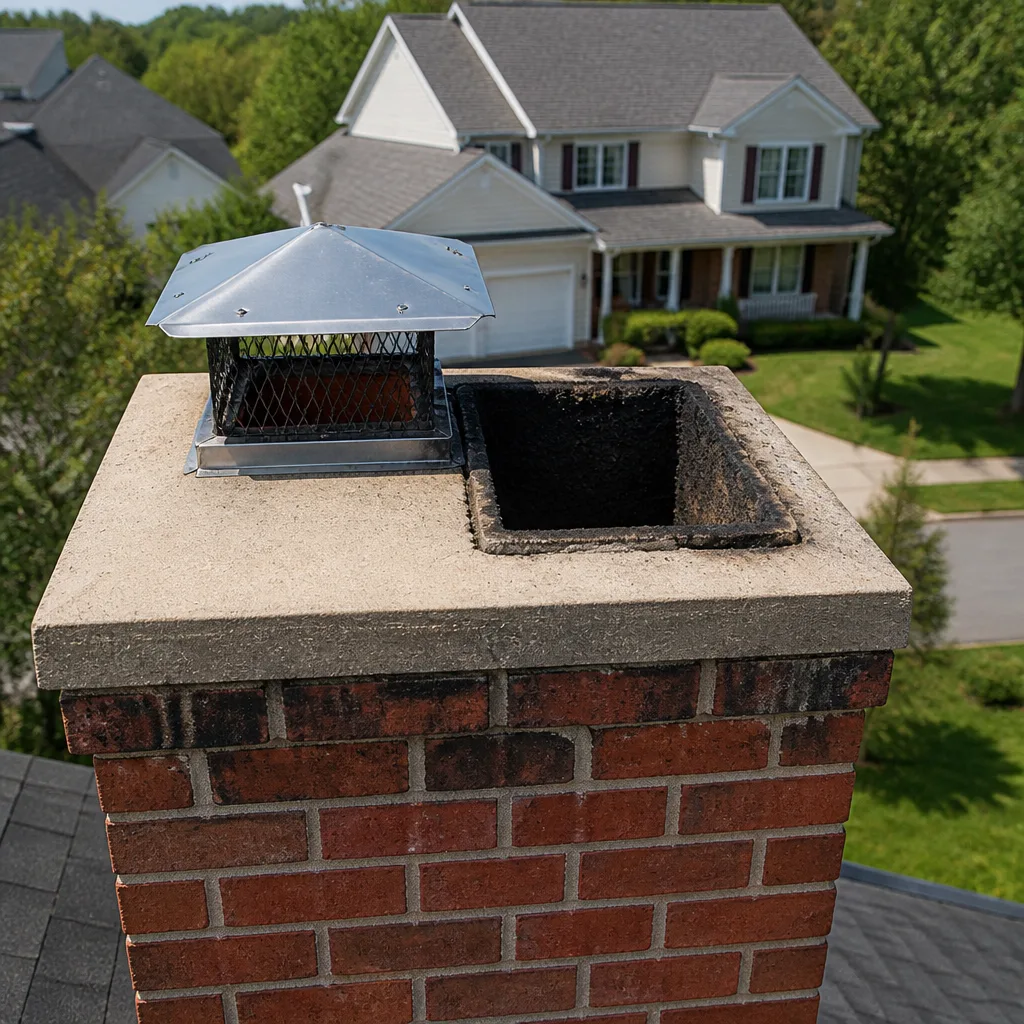
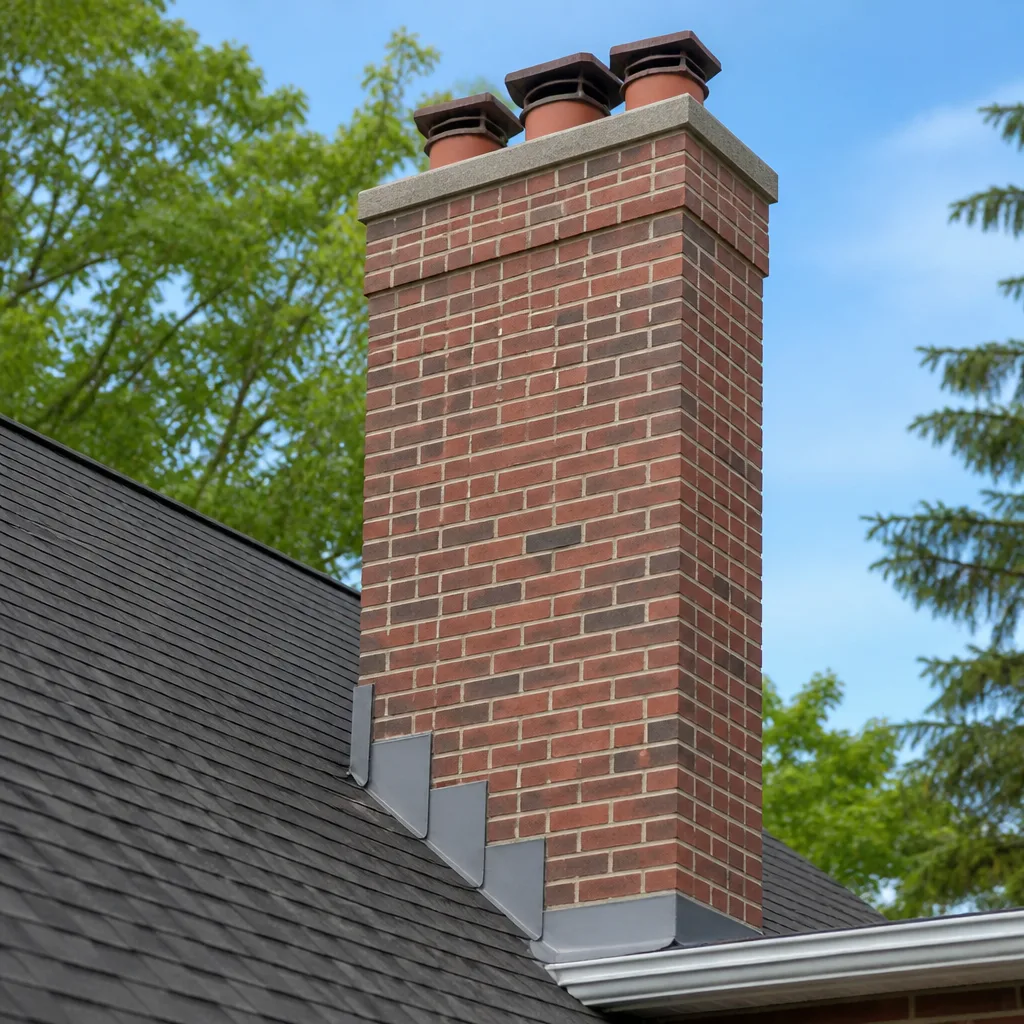
The crown is the concrete or masonry cap at the top of the chimney. It’s the chimney’s raincoat. A crack in the crown, however small, lets water run down into the flue and into the brick below. From the ground, a crown crack is a hairline or open line visible where the crown meets the flue tile – look for a dark line on a bright day, or visible moss, or an uneven edge along the crown’s slope.
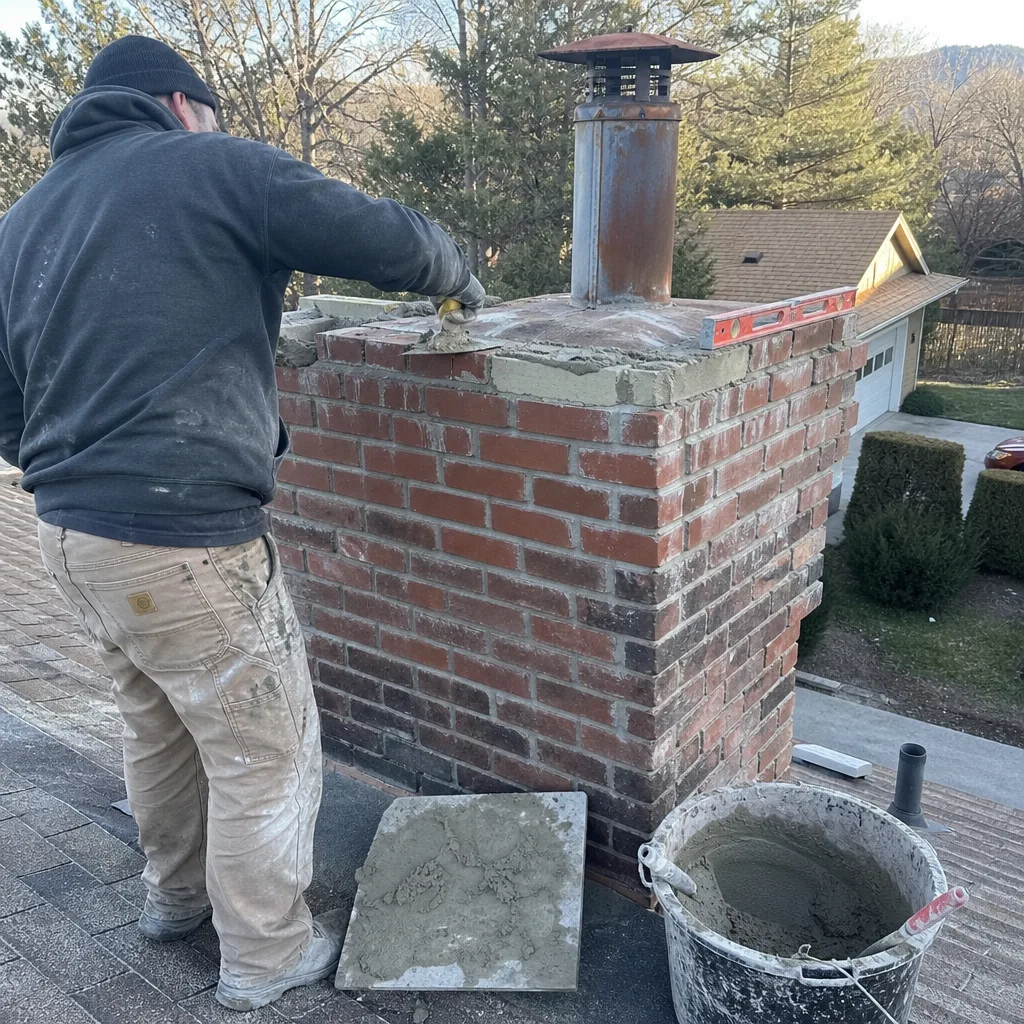
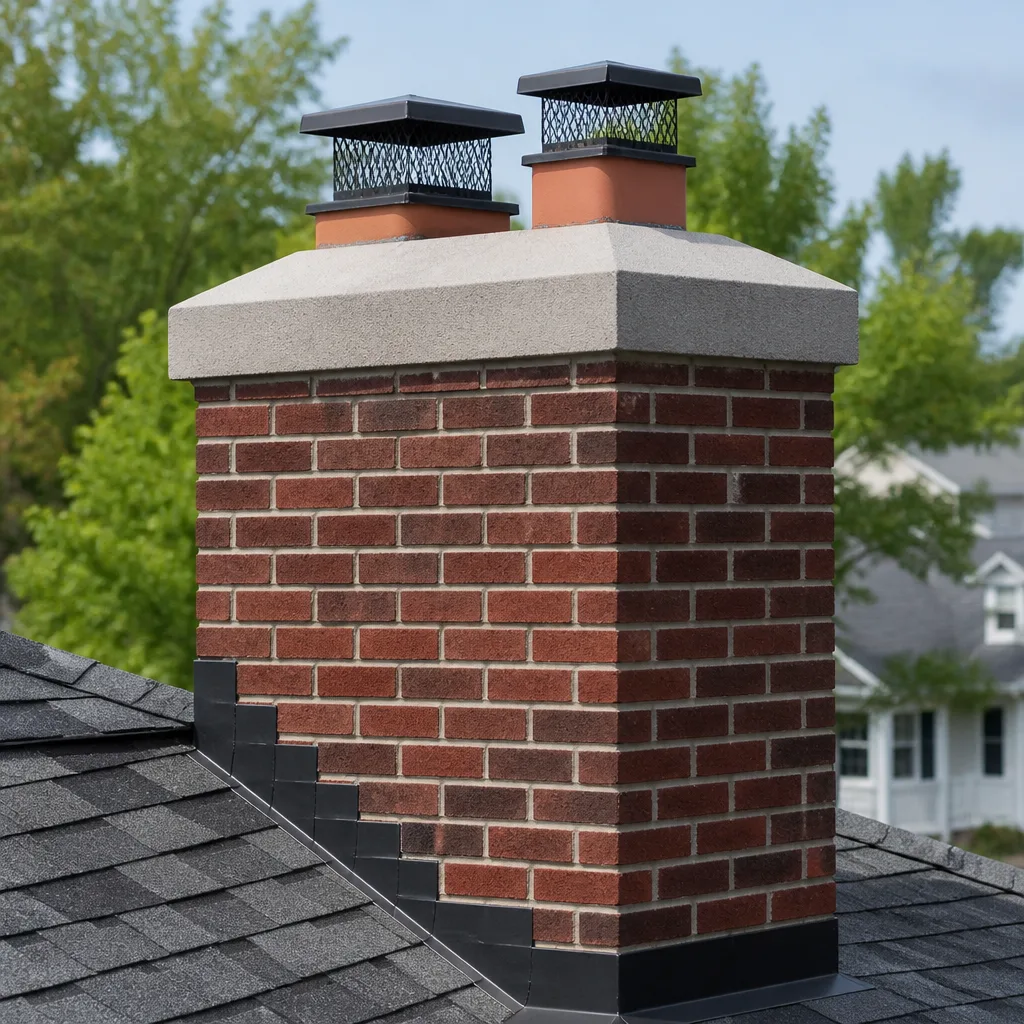
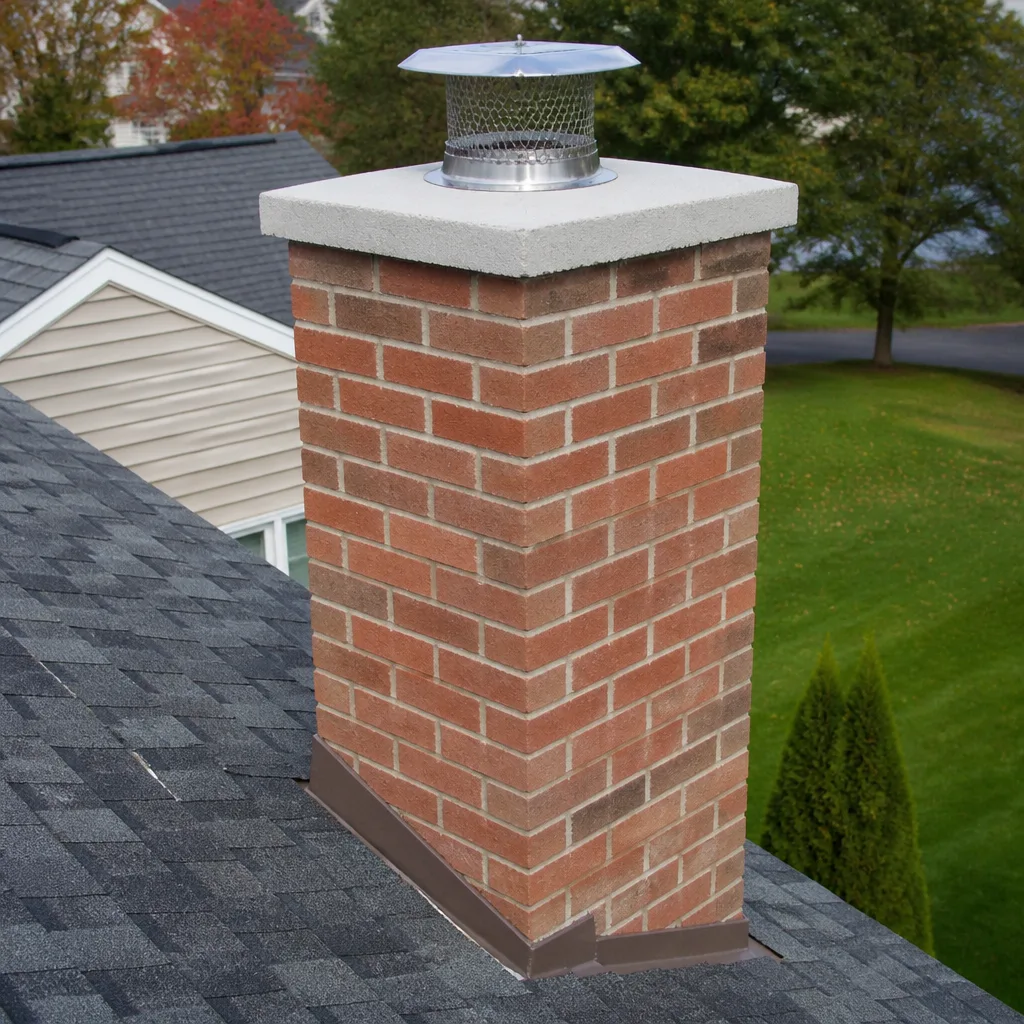
If the crown is failing, we reseal or replace the crown and add a cap to keep the rain out. That combination – a sound crown and a proper cap – is the single most effective moisture-protection investment you can make in a chimney. Our team works with professional-grade materials from brands like Gelco and Olympia Chimney on exactly that kind of repair.
Sounds and Smells That Signal Animals, Nesting, or Moisture
Chimneys make noise. Some of it is normal – the tick of metal expanding as the flue heats up, the low whoosh of draft on a windy day. Some of it isn’t. Knowing the difference can save you from a flue clogged by a nest or a masonry problem that only reveals itself through sound.
Sounds to listen for
- Scratching or rustling, usually in the morning: Birds or squirrels in the flue.
- Fluttering or chirping when the fire isn’t lit: An active nest. This is a stop-burning problem – a nest in the flue is a fire hazard and a blockage.
- Rattling or a dull thud on a windy day: A loose cap, a failing damper, or a piece of flue tile that has come loose.
- A persistent whistle: Air being pulled through a gap or a poorly seated cap.
Smells to watch for
A wood-burning chimney that hasn’t been used in a while often smells like stale smoke and ash when you open the damper for the first time in October. That’s normal. What’s not normal is a smell that lingers beyond the first burn or a smell that changes character.
- Musty or damp: Likely moisture in the flue or brick – check the crown and cap first.
- Sharp, acrid creosote smell: A heavy creosote load, or third-degree glaze.
- Animal smell (urine, droppings): Active animal presence or a nest that’s been in place long enough to need a professional removal.
- Dead animal smell: A bird or rodent that’s been trapped and needs to be cleared with the flue.
Any of these is a reason to get a professional inspection rather than a reason to reach for a consumer flashlight-and-mirror. Animals in a flue aren’t a job for guesswork, and nests need to be removed cleanly, not just shoved down into the firebox.
Stop Burning vs. Schedule an Inspection: The Difference That Matters
The most useful thing we can give a homeowner is a clear dividing line. Some warning signs mean “watch this and book an inspection.” Others mean “stop lighting fires until a sweep has cleared the flue.” Getting that wrong in either direction is the difference between an ignored problem and an unnecessary panic.
Stop burning until a professional clears it
- Visible shiny, glazed, or tar-like creosote at the firebox opening or flue.
- Smoke puffing back into the room from a fire that was drawing well earlier.
- Any evidence of an active nest, birds, or animals in the flue – confirmed by sound or smell.
- A strong, acrid creosote smell that persists between fires.
- Visible flue damage – cracked tiles, a liner that looks detached, or masonry that has moved.
- Any chimney fire that you suspect has occurred, even a small one you heard rather than saw.
Watch this and schedule an inspection
- Efflorescence on the exterior brick, with no spalling yet.
- A hairline crack or slight unevenness in the crown.
- Second-degree creosote, with the fire drawing normally.
- Persistent musty smell, warm weather only.
- A fire that’s become slightly slower to catch, without other symptoms.
- A cap that’s visibly loose, bent, or missing a screen.
This isn’t a perfect list. A chimney can be in trouble in ways only a camera or a proper inspection will find. But the split matters because it stops you from continuing to burn into a growing creosote load, and it stops you from panicking about a chimney that just needs a sweep.
How Boulder’s Climate and Housing Stock Shape Chimney Wear
Boulder’s chimney problems look different from those in wetter or milder climates. Knowing the local patterns helps you watch the right things.
Freeze-thaw is the biggest factor
Boulder routinely swings from warm afternoons to freezing nights in winter and early spring. Water goes into the masonry during a warm day and freezes the same night. That expansion drives spalling and opens mortar joints faster here than in places with more stable temperatures. The practical takeaway: check the chimney exterior after every big late-season snow or cold snap, not just in the fall.
Dry, windy air and draft
Boulder’s windy days are a chimney draft test in themselves. A chimney that used to handle a windy day without trouble but now back-puffs occasionally during a gust may have a partial blockage or a cap that’s losing its seal. Wind is not the cause – it’s just the messenger.
Older housing stock near downtown and the Hill
Homes in Boulder’s older neighborhoods often have brick chimneys that were built before modern liner standards, and many have flues that were sized for fireplaces that have since been converted or replaced. When we inspect an older chimney in Boulder, we’re looking for a flue that’s been adapted without a liner or with a liner that no longer meets the current code for the appliance that’s there now. HeatShield and DuraFlex liner systems exist for exactly this reason – to restore a flue without demolishing the chimney around it.
The spring and fall shoulder seasons
Boulder’s fire seasons rarely line up with the calendar. A warm fall can stretch into December, and a cold snap in April can bring fires back for a week. That means chimney checks belong in early fall, before the first real burn, and again after the last fire of the season. A sweep in the fall catches the buildup from the prior winter. A walkaround in the spring catches freeze-thaw damage before it has a summer to get worse.
A Seasonal Walkaround Checklist for Boulder Homeowners
Here’s a 10-minute walkaround you can do yourself. It won’t replace an annual inspection, but it catches most of the exterior warning signs and gives you a clear list to bring to a professional. Do it once in the fall before your first fire and once in the spring after your last one.
- Walk the perimeter of the chimney at ground level. Look for white chalky staining (efflorescence) and flaked brick faces (spalling). Note where you see it – the sun- and wind-facing sides matter.
- Look at the crown. From a safe distance, note any dark line, gap, or unevenness where the crown meets the flue tile. Look for moss or dark patches.
- Check the cap. A cap should be seated flat and have an intact screen. Look for looseness, rust, or gaps at the edges.
- Inspect the mortar joints. Run a fingertip along a joint at eye level. Crumbling mortar means water and freeze-thaw have been at work.
- Open the damper and smell. Note the smell. A stale smoke smell is normal after a summer of disuse. A sharp, acrid, or animal smell is not.
- Shine a flashlight up the flue from the firebox. Note whether the flue surface is powdery, flaky, or shiny. Note any obvious debris.
- Light a small test fire on a calm, cold morning. Watch how quickly the fire catches and how the smoke moves. Note any puffing, slow draw, or smoke into the room.
- Listen on a quiet morning. Note scratching, fluttering, or any sound that comes from the flue rather than the room.
Write down what you find. A short list of observations gives a professional something concrete to check, and it lets you compare year over year. We’ve found that homeowners who keep this kind of running record catch developing problems earlier than those who only look when something feels wrong.
If anything on this list doesn’t match last year’s notes, that’s your cue to book an inspection. Our fireplace repair team can trace a smoke behavior problem back to its source, and our Boulder Chimney Sweep Pros crew handles the sweep, inspection, and structural work in one visit.
Common Mistakes to Avoid
- Treating efflorescence as a cosmetic problem. The white haze is evidence of water moving through the masonry. Sorting out the crown and cap early avoids the spalling repair later.
- Assuming glazed creosote is just “a heavy soot.” Third-degree creosote looks different from soot – shiny and tar-like – and burns. It needs to be removed before the next fire.
- Burning wet or unseasoned wood to stretch the firewood supply. Green wood produces far more creosote than dry wood and adds to the buildup you’re trying to avoid.
- Ignoring a crown crack because it looks small. In Boulder’s freeze-thaw cycle, a hairline crown crack has a full winter to widen. The cost of repair goes up with every freeze.
- Not checking the cap after a wind event. A loose cap on a windy day can let in rain and, over time, allow birds into the flue. It’s a 30-second check from the ground.
- Skipping the annual sweep because “there was no smoke problem.” Bushy or glazed creosote can build up without obvious smoke symptoms. A camera inspection catches what the eye can’t.
- Patching a masonry repair with off-the-shelf mortar. Chimney mortar and crown patch need to be matched to the masonry and the climate. Professional-grade materials like Gelco and HeatShield exist for a reason.
See the difference
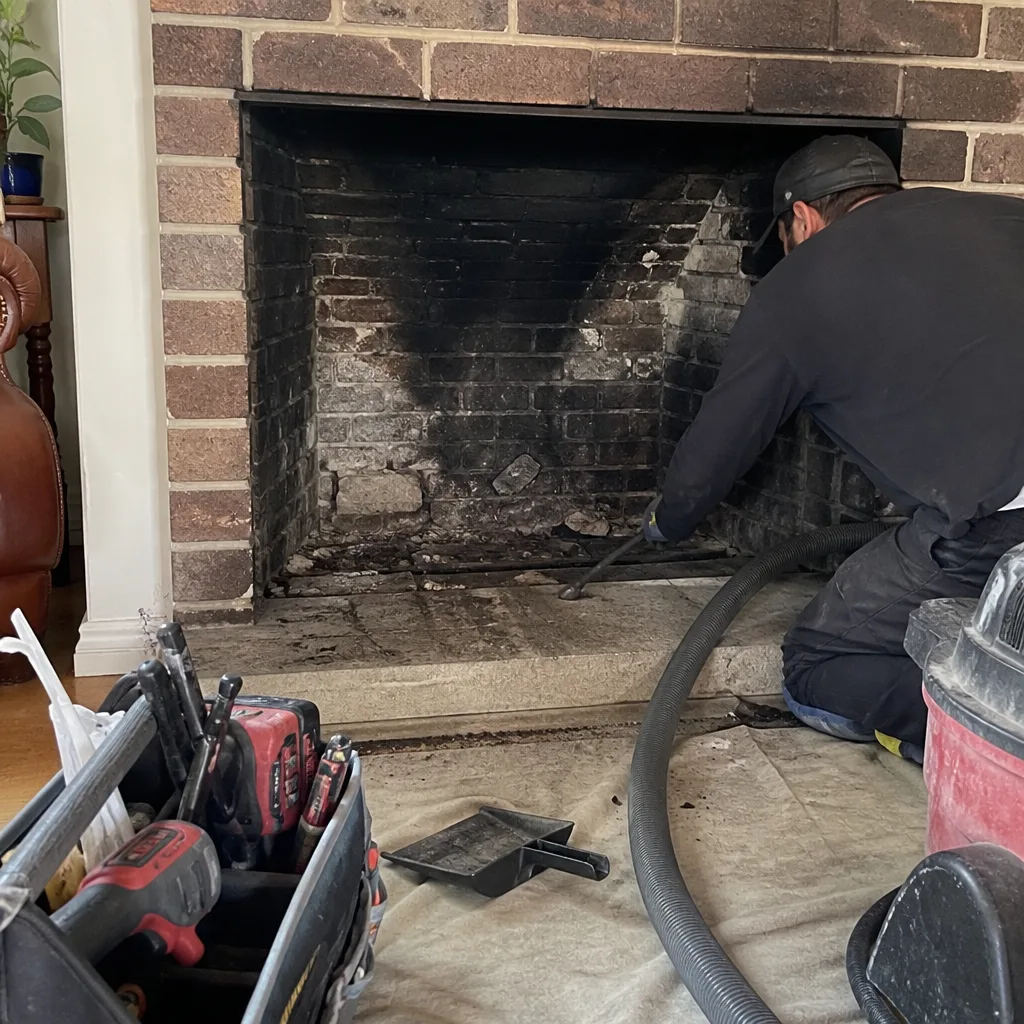 Before
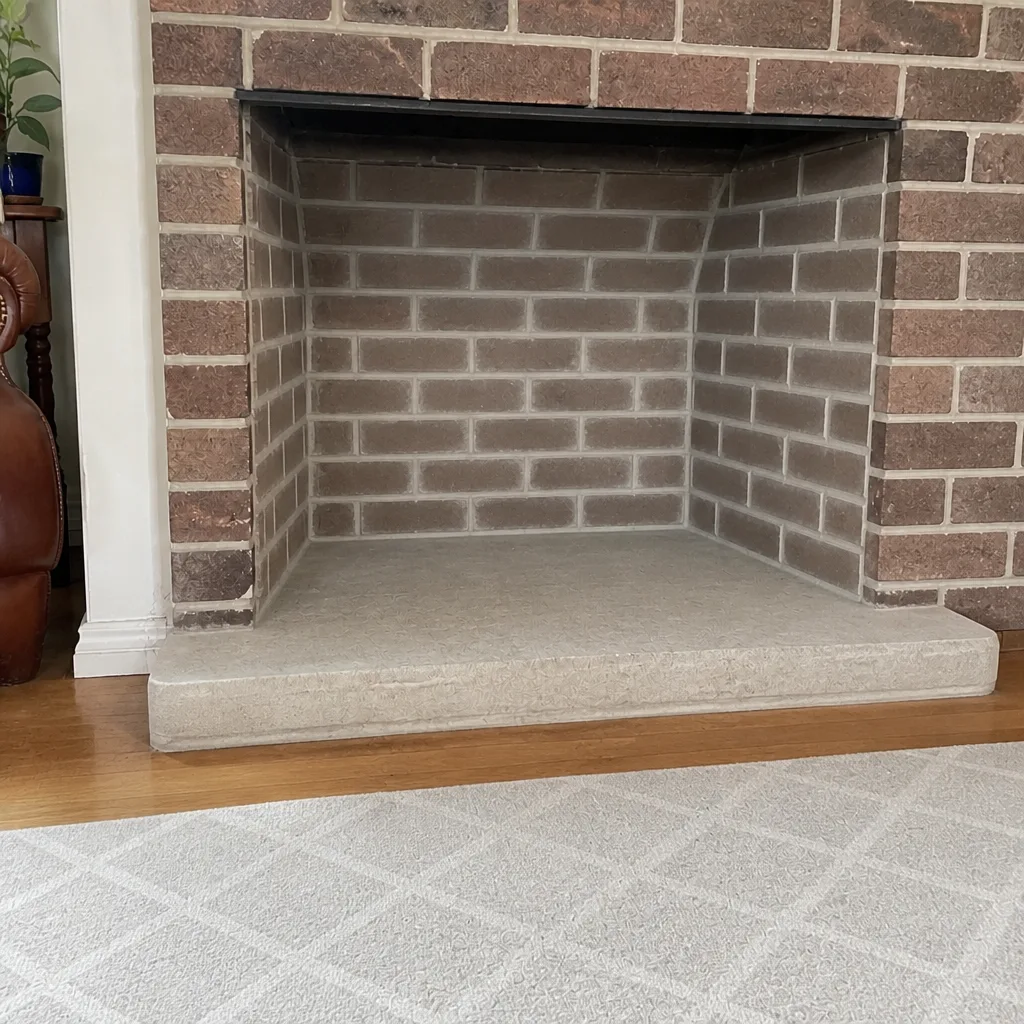 After
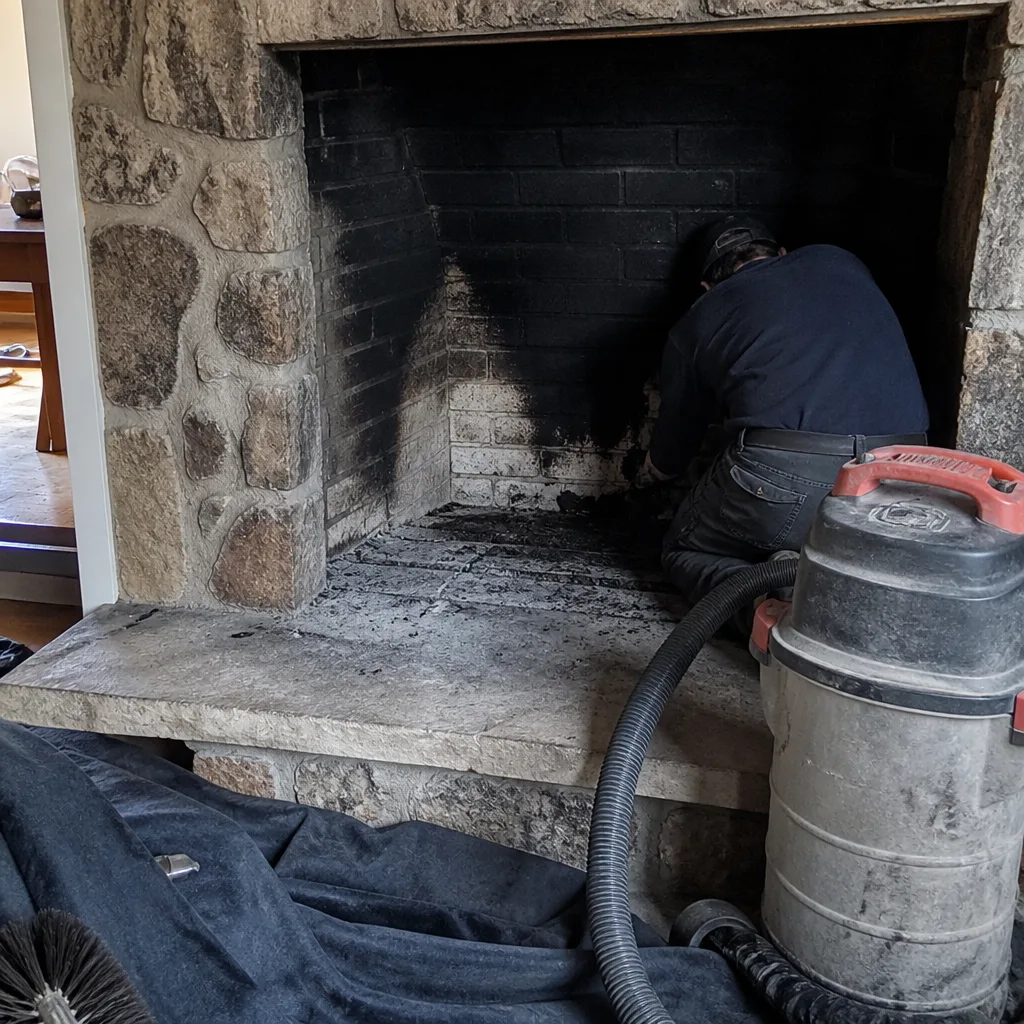 Before
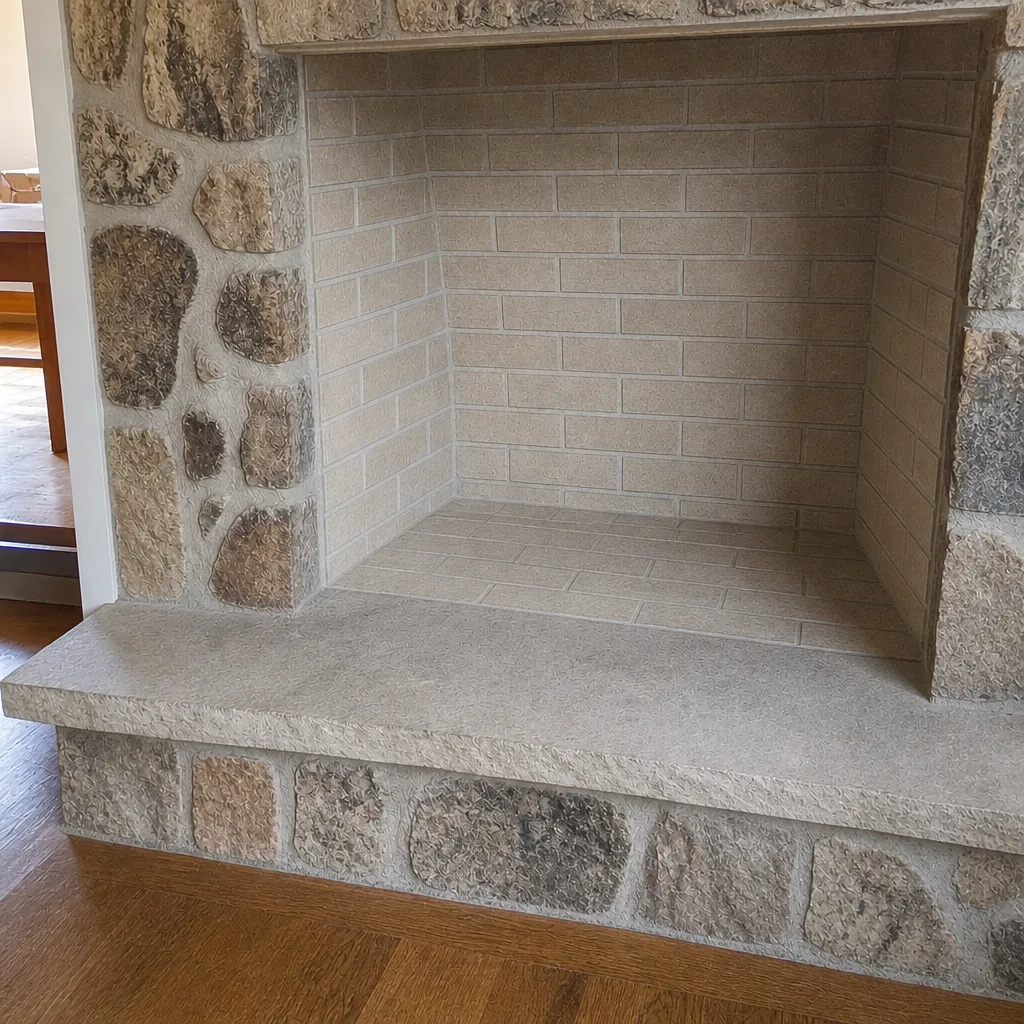 After
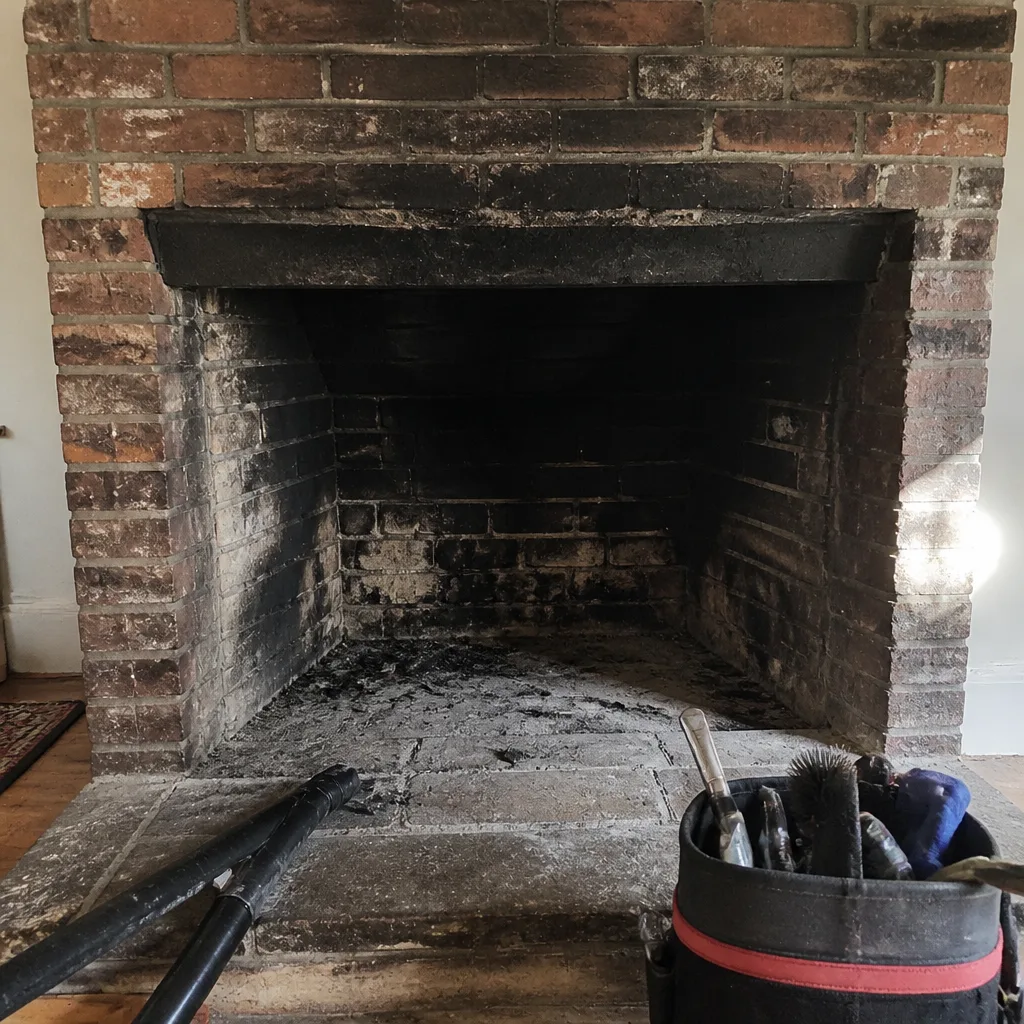 Before
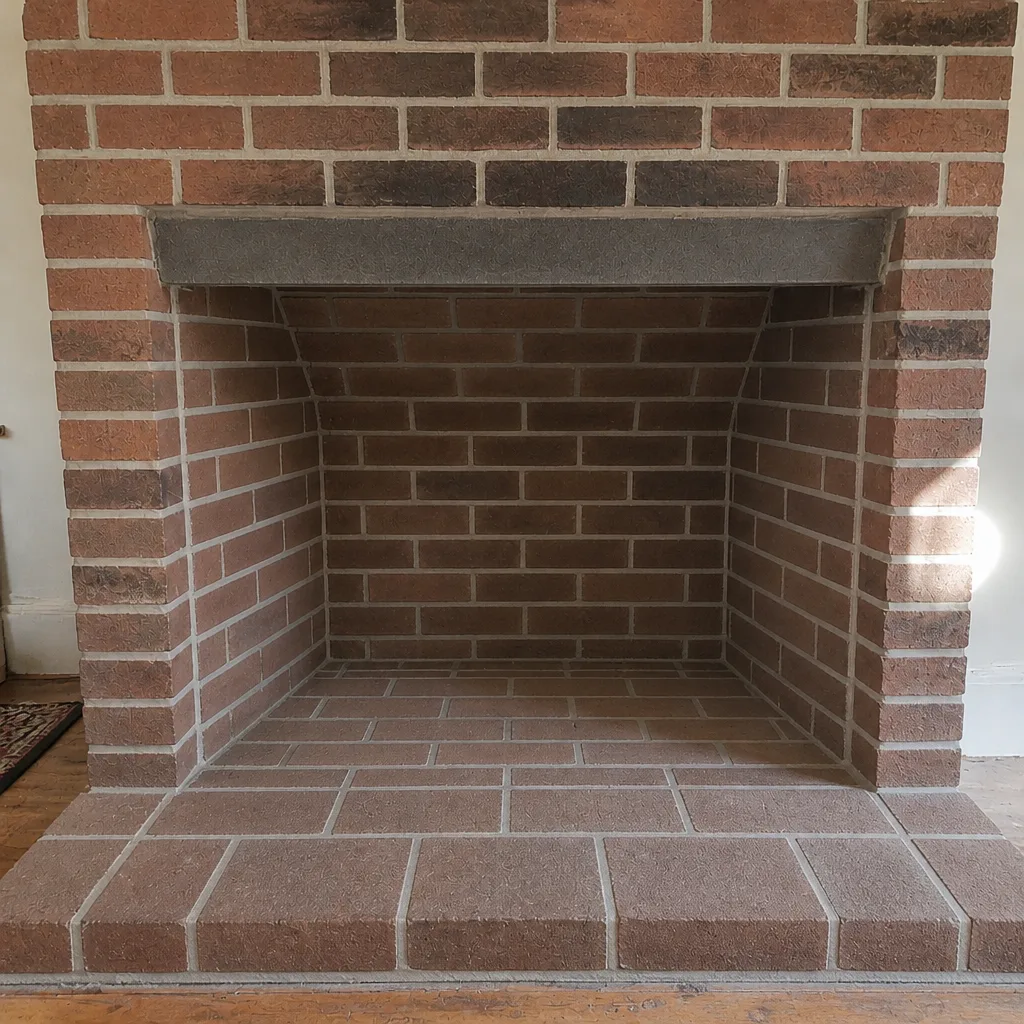 After
When to Call a Professional
Call a professional if any of the following is true: you’ve seen glazed creosote at the firebox opening, your fire back-puffs or smokes into the room, you have efflorescence and spalling together, a crown crack has been visible for more than one season, or you’ve heard animals or a fluttering sound in the flue. Call also if you’ve just bought an older home in Boulder and haven’t had the chimney inspected. And call if you haven’t had a sweep in over a year and you burn regularly – buildup that’s fine in November can be a fire risk by February.
Boulder Chimney Sweep Pros offers free estimates in Boulder – call (877) 820-8761. We inspect before we recommend, and we’ll tell you plainly when a chimney can wait. Call (877) 820-8761. We answer 24/7. Fast dispatch from 7am to 7pm, Sunday through Friday.
Frequently Asked Questions
Efflorescence. The white chalky staining on exterior brick is easy to dismiss as mineral deposit or an old stain, but it’s direct evidence that water is moving through the chimney. It’s the earliest visible sign of the moisture problem that leads to spalling, and it’s the cheapest thing on the list to fix. If you see it, schedule an inspection before the next freeze. Call (877) 820-8761 for a free estimate.
Usually, yes. Shine a flashlight up the flue from the firebox opening. Soft, powdery gray or black soot is first-degree creosote – normal. Flaky, crusty buildup is second-degree. Shiny, black, tar-like glaze is third-degree, and that’s the fire hazard. If you see the glazed stage, stop burning fires and book a sweep. Call (877) 820-8761 for an exact quote – estimates are free.
Once a year for a wood-burning fireplace under regular use, and more often if you burn hard through the winter or use unseasoned wood. A gas appliance usually needs an annual inspection even if a full sweep isn’t required every year. Boulder’s long burn season means buildup can happen faster than people expect. Call (877) 820-8761 to book a sweep and inspection together.
Not always. Cracks that are isolated and haven’t compromised the flue’s structural integrity can often be restored with HeatShield’s ceramic resurfacing, which seals a flue without demolishing it. Larger cracks, offset flues, or damaged tiles may call for a flexible liner like DuraFlex. We inspect with a camera first and show you what we’re seeing. Call (877) 820-8761 for a free estimate.
A musty smell in warm weather usually means moisture in the flue or brick. The most common causes are a failing crown, a cracked cap, or a missing cap screen. Those are moisture signs, not smoke signs, and they’re the reason a cap and crown inspection belongs in the fall walkaround. Call (877) 820-8761 for a free estimate.
Not without an inspection. Spalling means the masonry is losing structural material, and the same moisture cycle can affect the flue tile on the inside. A professional camera inspection tells you whether the interior is sound. Until then, we’d recommend pausing fires. Call (877) 820-8761. We answer 24/7 and can book you into the next available slot.
The Bottom Line
Most chimney failures we see in Boulder are visible long before they become structural. Efflorescence, third-degree creosote, a crack in the crown, smoke that back-puffs, and a musty smell in July are the signals that matter most. The trick is to know which signal means “watch and schedule” and which means “stop burning now.” A 10-minute walkaround twice a year, a camera inspection once a year, and a sweep on the same schedule catch the vast majority of problems while they’re still small. Our technicians have up to 15 years of experience, and we work with professional-grade products from brands like HeatShield and Olympus-family manufacturers because a proper repair protects the whole chimney – fire-safe and water-tight – rather than patching the symptom.
Ready for a proper look at your chimney? Call (877) 820-8761 for a free estimate. We’ll inspect before we recommend, show you what we find on camera, and tell you plainly what needs doing now and what can wait.
Written by the team at Boulder Chimney Sweep Pros.